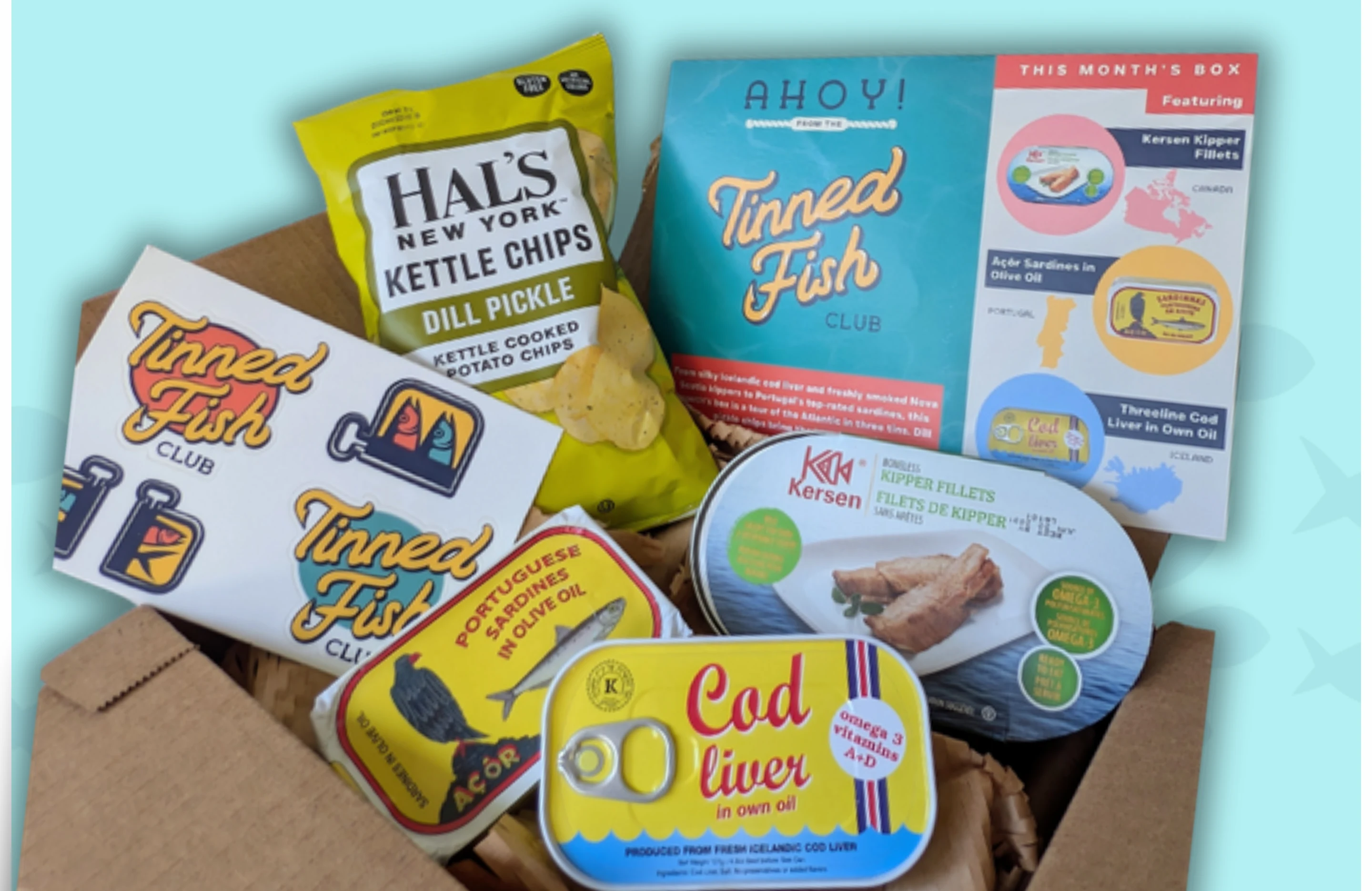
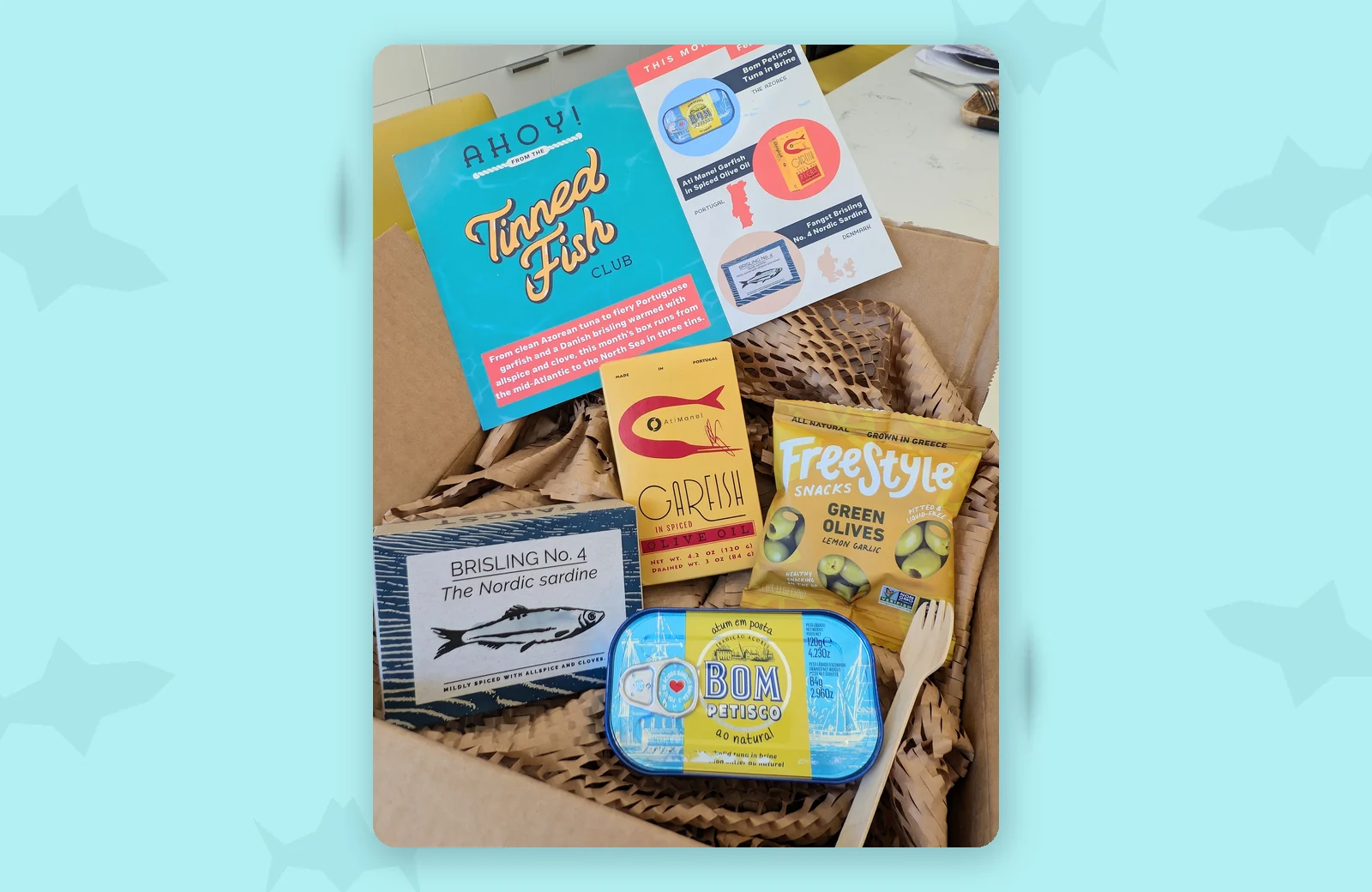
Tinned Fish Club for August 2026: Bom Petisco Tuna in Brine, Ati Manel Garfish in Spiced Olive Oil, Fangst Brisling No. 4
Bom Petisco Tuna in Brine
Skipjack is the smallest and fastest-growing of the commercial tunas, which is exactly why it is the one worth eating often. It matures in a couple of years rather than a decade, so the stocks recover at a pace the bluefin never manages. Around the Azores it is caught by pole and line, one rod and one hook at a time, a method that all but eliminates bycatch and has been practiced off these islands for generations.
Bom Petisco put down Azorean roots in 1962, drawn to the cold, clean water and the quality of the fish around the islands. Skilled hands still prepare and pack it, and the tin is deliberately plain: tuna, salt, water, and nothing else. No oil, no sauce, no preservatives, which leaves the flaky texture and clean flavor with nowhere to hide. The name is worth knowing too. Bom means good and petisco means a small dish or a snack, so the brand is literally called good little bite.
Olive & Tuna Tapenade Toasts
Pulse a handful of lemon garlic olives in a food processor, or chop them by hand, until roughly broken up. Add the tuna, a squeeze of lemon juice, a drizzle of olive oil, and a little chopped parsley, then pulse a few more times. You want it chunky, not smooth. Season with black pepper and flaky sea salt. Spoon onto toasted baguette and finish with lemon zest. Briny, bright, garlicky, and packed with tuna.

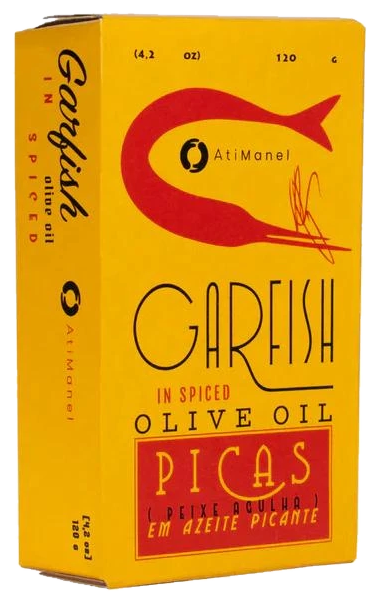
Ati Manel Garfish in Spiced Olive Oil
Garfish is one of the odder things you will find in a tin, and one of the better ones. It is a needlefish: long, slender, with a beak full of small sharp teeth and, disconcertingly, bones that are naturally bright green. That green is harmless, caused by a pigment called biliverdin, but it has kept the fish off menus in places where diners eat with their eyes first. Portugal never had that problem. The flesh is firm, mild and faintly sweet, and it holds up to a spiced oil far better than a softer fish would.
Ati Manel was founded in 1922 near Figueira da Foz and then went quiet for decades. When the family rediscovered the old labels, recipes, printing materials and correspondence with fishermen and suppliers, the founder's great-grandson saw a chance to revive more than just a name. He used those archives to bring back the original recipes and visual identity, which is why the tin looks like it sailed out of another era.
Garfish Toasts with Whipped Feta & Spiced Oil
Spread toasted sourdough with a thin layer of whipped feta. Lay a few pieces of garfish on top, then spoon over some of the spiced olive oil from the tin. Finish with chopped parsley, a squeeze of lemon, and flaky sea salt. The creamy feta softens the garfish's briny edge while the aromatic oil does the heavy lifting.
Fangst Brisling No. 4 Nordic Sardine

Brisling are among the smallest sardines in the world, and the cold water they come from is the reason they are worth seeking out. Growth is slow in Scandinavian seas, and slow growth means fine bones and tender flesh rather than the coarser texture of a warm-water fish. For generations these were caught in enormous numbers along the Scandinavian and Baltic coasts during the long summer days, when near-endless Arctic light made it possible to work through what should have been night.
Fangst, which simply means catch in Danish, takes its cue from that old Nordic preserving culture and has done a lot to give an overlooked fish a place at the table again. Here the brislings are smoked over beechwood and paired with allspice and clove, which sounds more like mulled wine than seafood and works far better than it has any right to. The result is clean, savory and subtly sweet, and good enough to eat straight from the tin.
Nordic Brisling Rye Bites
Spread slices of dark rye with softened butter or crème fraîche. Top with the brisling sardines, then add thinly sliced cucumber, a little red onion, and fresh dill. Finish with a squeeze of lemon and a few flakes of sea salt. The cool, crisp toppings balance the warm allspice and clove while the rich brisling ties it together. A very small open sandwich with a lot of Nordic charm.
Freestyle Snacks Green Olives, Lemon Garlic
This month's snack is a pouch of Greek green olives in lemon and garlic, pitted and drained of their brine so there is no liquid to deal with. That last part is the clever bit. An olive normally arrives in a jar of salty water, which makes it a fridge item and an awkward thing to put on a plate. These are dry, so they travel, and they go straight onto a board next to an open tin.
Lemon and garlic belongs to every coastline in this box, from the Azores to the Algarve, and it does the same job here that it does beside a plate of grilled fish. It cuts richness and resets the palate between tins, which matters when you are working through clean tuna, spiced garfish and a sweet-spiced brisling in one sitting. They also do double duty: chop a handful into the tapenade in the first recipe above and you have used the snack as an ingredient.
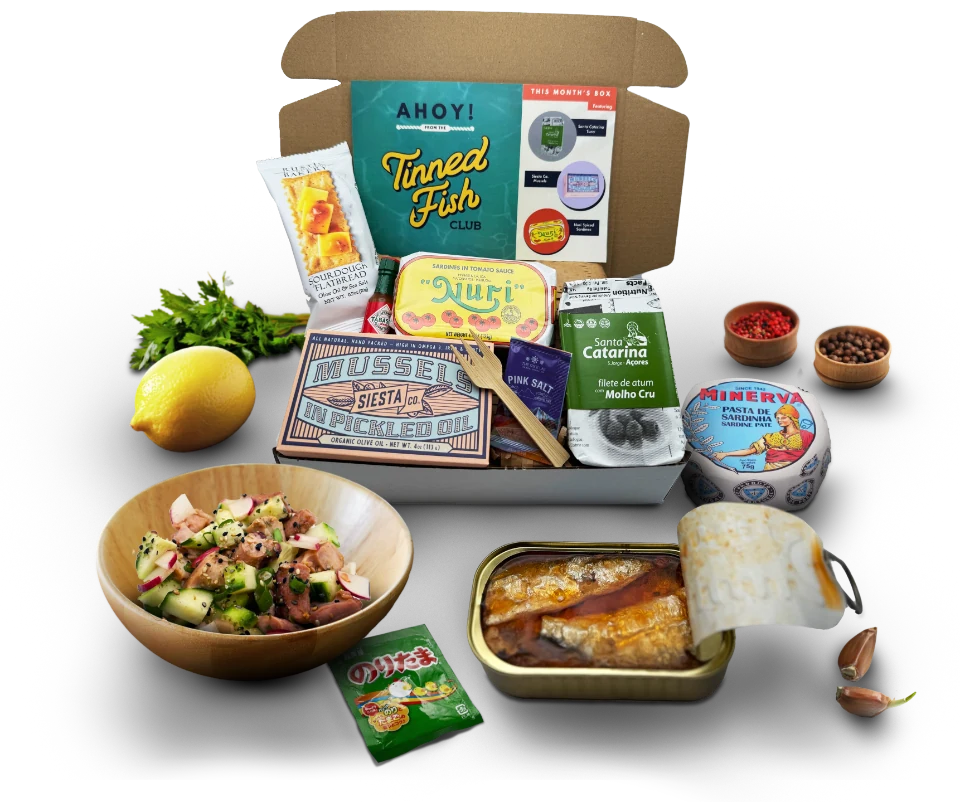
The world's best tinned fish, on your table every month.
Three curated tins from small canneries in Portugal, Spain, Denmark and beyond, with the recipes and maker stories that go with them.
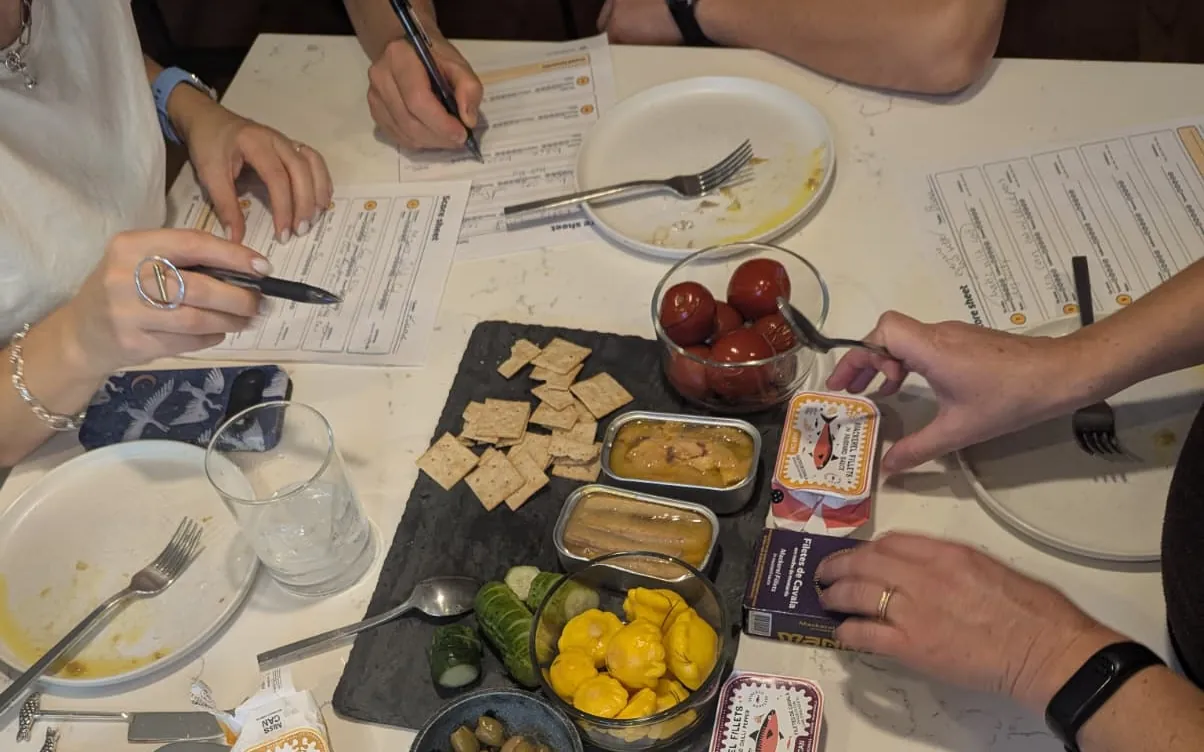
How to Host a Tinned Fish Tasting Party
Tinned Fish Club for September 2026
Tinned Fish Club for August 2026