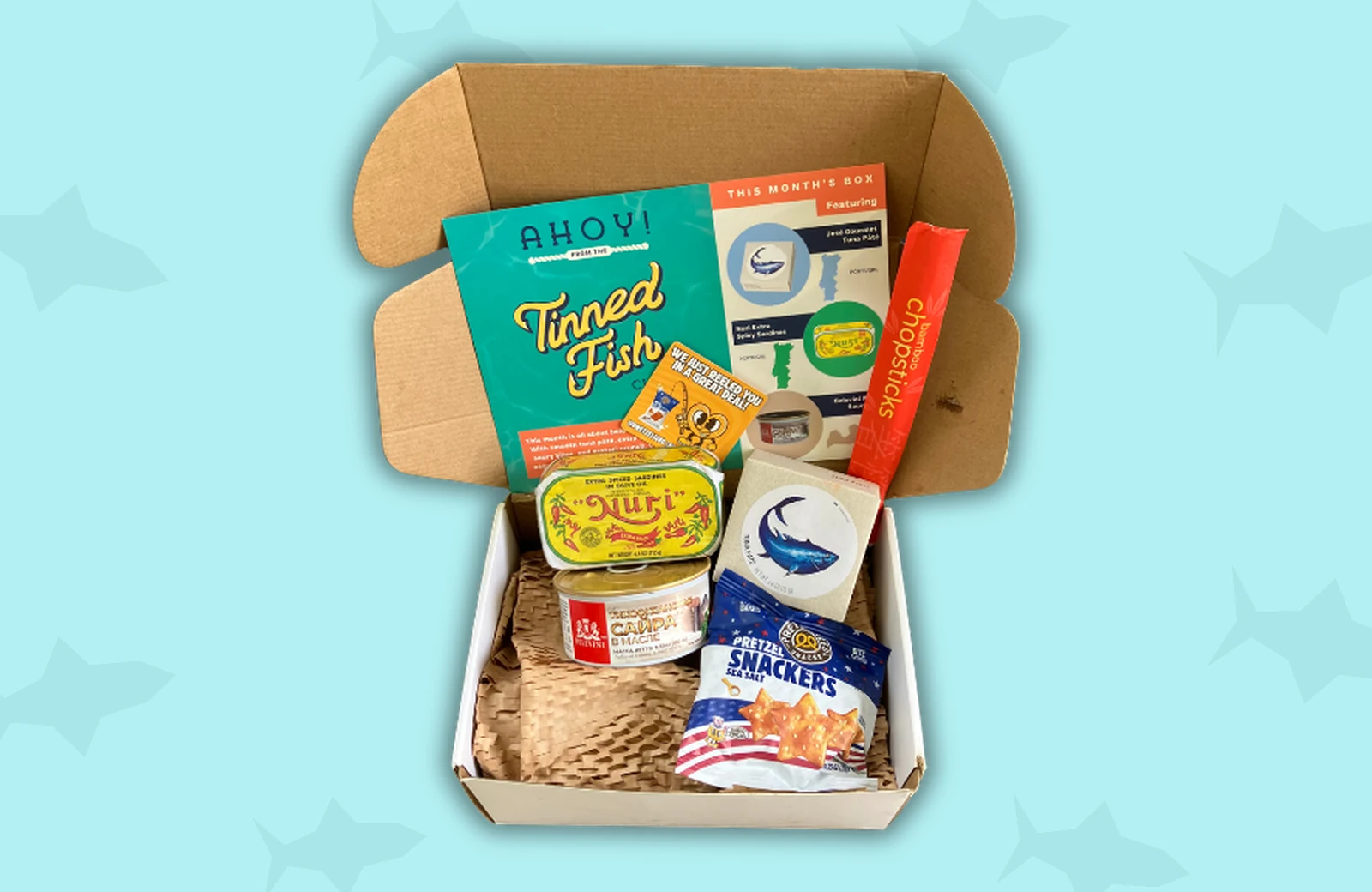
Tinned Fish Club for February 2026: Sanma Kabayaki Saury, King Oscar Mackerel, and Berthe Sardines in Spiced Olive Oil
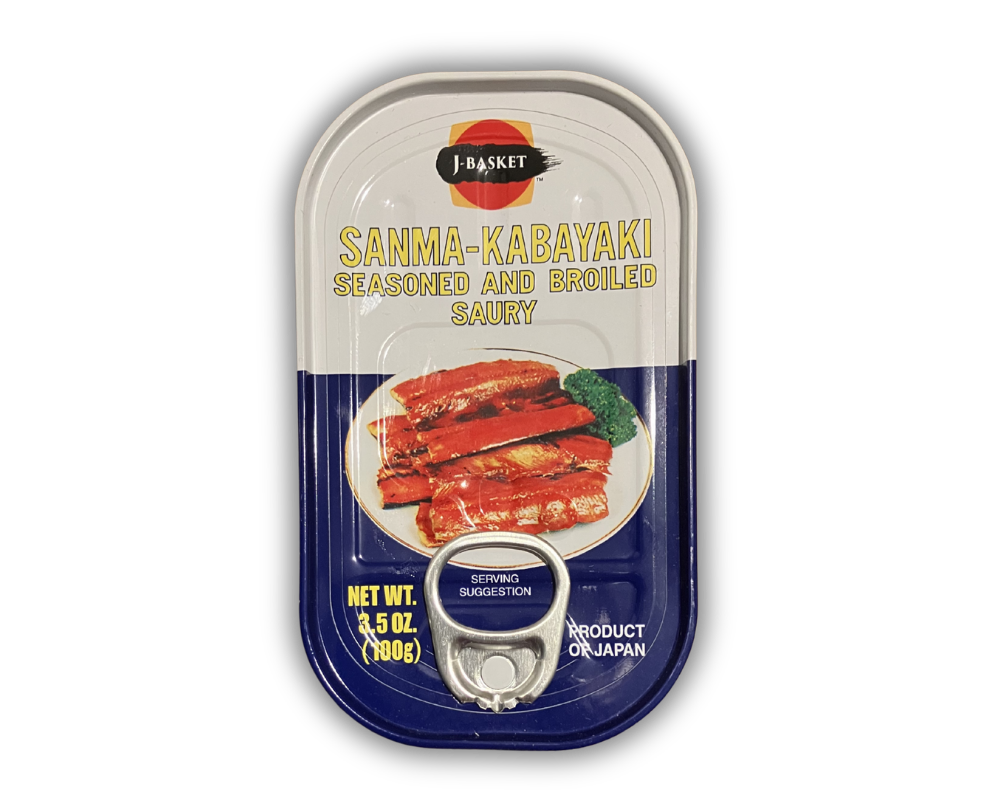
J Basket Sanma Kabayaki Saury
Sanma (Pacific saury) is a beloved Japanese fish traditionally prepared kabayaki style. The fish is broiled and glazed in a sweet soy-based sauce that caramelizes into a rich, savory finish.
Japan has been canning seafood since the late nineteenth century, and tins like this reflect a distinct tradition. Rather than simple preservation, this is a fully composed dish in one small pull-tab tin.
Tender, umami-rich, and deeply satisfying, it is excellent over warm rice but just as good straight from the can. Fun fact: this is the tin that first sparked the idea for Tinned Fish Club. We found it at a Japanese market in Boston while looking for a quick snack and had barely explored tinned fish before. One bite and we knew more people needed to experience flavors like this.
Sanma Kabayaki Rice Bowl
Cook ½ cup short grain, sushi or jasmine rice. Spoon the hot rice into a bowl and lay the sanma over the top, pouring the glossy soy glaze from the tin onto the rice. Cover for one minute to let the steam gently warm the fish and loosen the sauce. Top with sliced scallions and sesame seeds. Add a soft boiled egg if you like and finish with a drizzle of sriracha. For brightness, serve with grated carrot, thinly sliced cucumber, or pickled ginger. Sweet, savory, and deeply comforting.
King Oscar Mackerel with Jalapeño Peppers
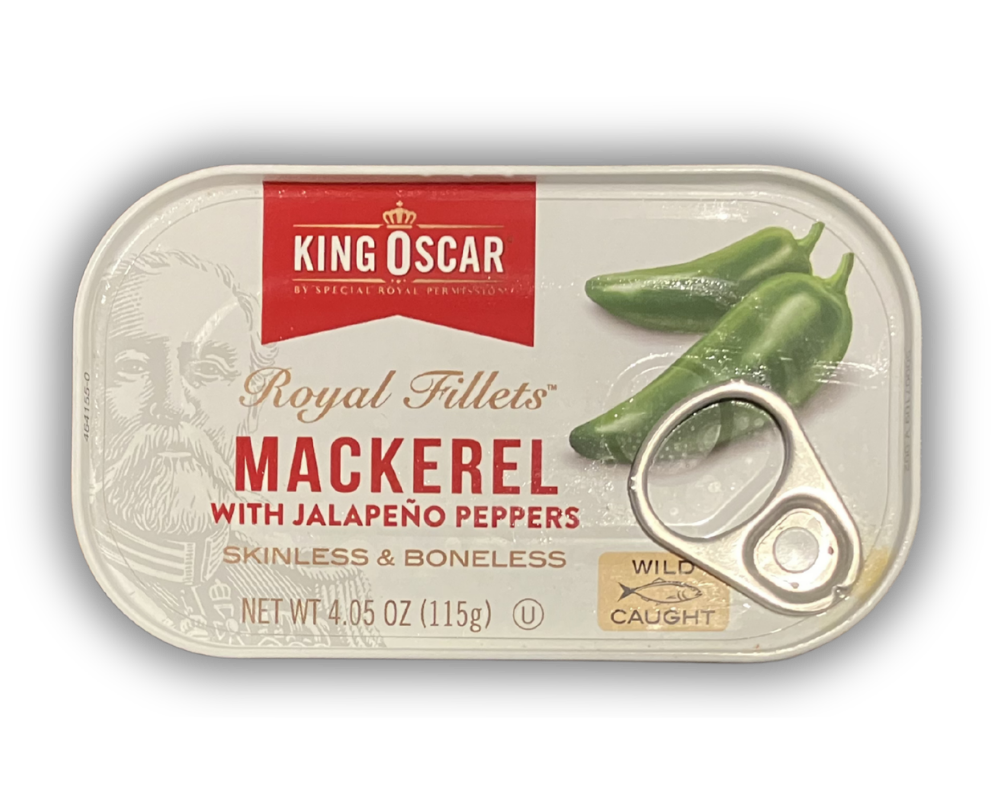
Founded in 1902 and named with royal permission from Norway’s King Oscar II, King Oscar has earned a global reputation for premium tinned seafood. The brand has focused on responsibly sourced fish, careful trimming, and consistent quality for more than a century. While King Oscar may be familiar, this jalapeño variation is less commonly found on everyday shelves and has quietly built a loyal following with consistently strong reviews.
Their wild caught mackerel is firm and naturally rich, with a buttery texture and high levels of omega-3s. The sliced jalapeños add a bright, grassy heat that cuts through the richness without overpowering the fish. It’s a heritage brand with a bold, modern edge. A reminder that even the classics can still surprise you.
Jalapeño Mackerel Layer Dip
In a serving bowl, spread one can of refried beans into an even layer. Mash one ripe avocado with a squeeze of lime and spread gently over the beans. Break the mackerel into large pieces and arrange over the avocado. Top with chopped tomato, shredded cheddar, sliced black olives, and fresh cilantro. For extra flavor, drizzle a little of the reserved oil from the tin over the top before serving. Serve with tortilla chips and lime wedges for a bold, creamy, spicy dip that’s game-day ready.
Berthe Sardines in Spiced Olive Oil with Pickles
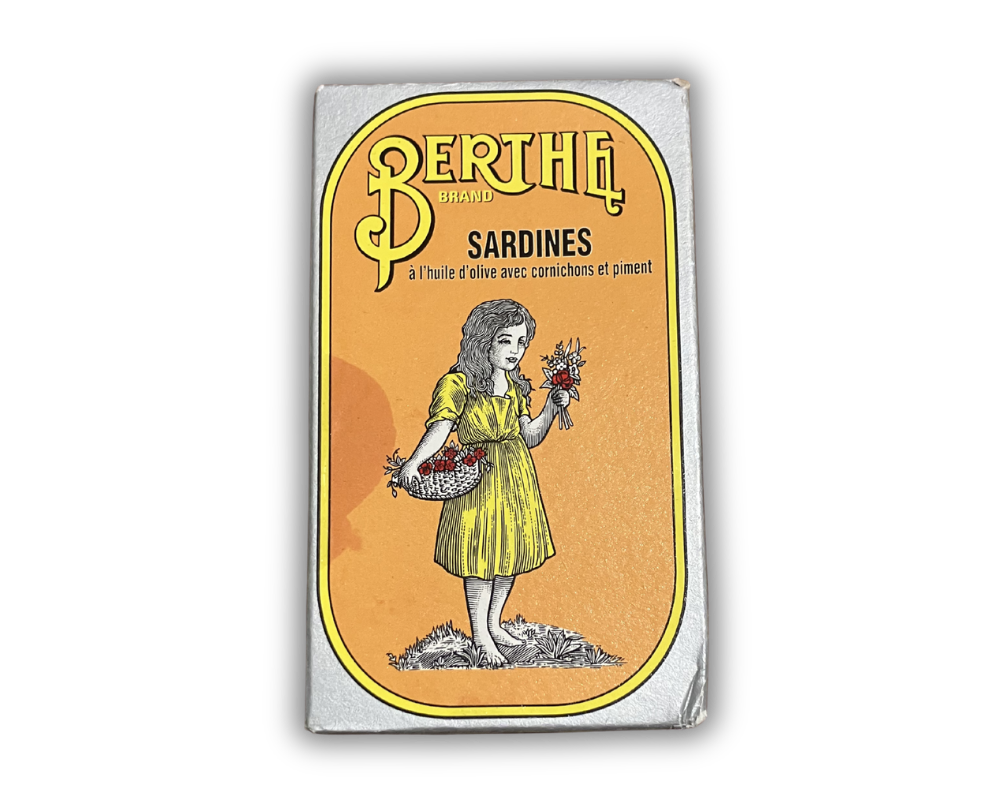
Rooted in the rich sardine-canning tradition of coastal France, Berthe reflects a heritage that dates back to the 19th century, when Brittany became a center of artisanal seafood preservation. Over time, French sardines evolved from humble coastal fare into prized delicacies, valued for their richness and ability to develop deeper flavor in the tin.
These sardines are hand-packed in olive oil and layered with warm spices and bright cornichon pickles. The acidity of the pickles cuts through the natural richness of the fish, creating a classic French balance of brine, oil, and gentle heat. This is the kind of tin that belongs on a board with good bread and good company.
French Sardine Tartines
Slice a baguette and toast lightly until golden. Spread each slice with salted butter or a thin layer of Dijon mustard. Lay a sardine over the top and spoon a little of the spiced olive oil from the tin over each piece. For a bright, briny finish, add a few chopped cornichons if you have them. Finish with cracked black pepper and a squeeze of lemon. Simple, balanced, and unmistakably French.
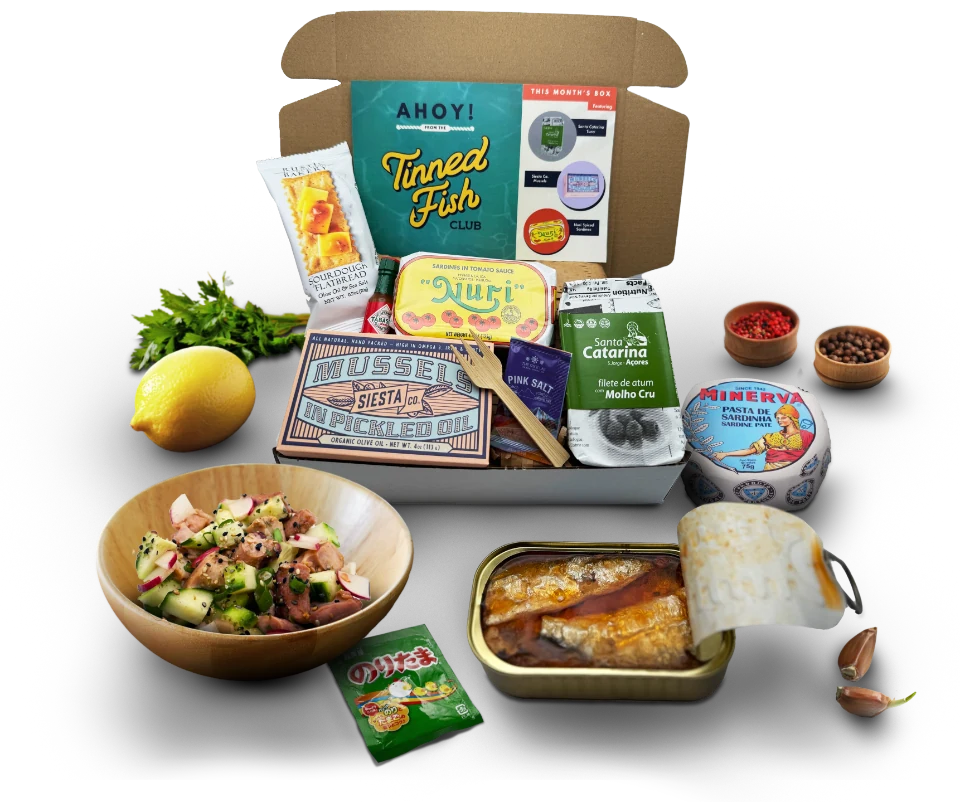
The world's best tinned fish, on your table every month.
Three curated tins from small canneries in Portugal, Spain, Denmark and beyond, with the recipes and maker stories that go with them.
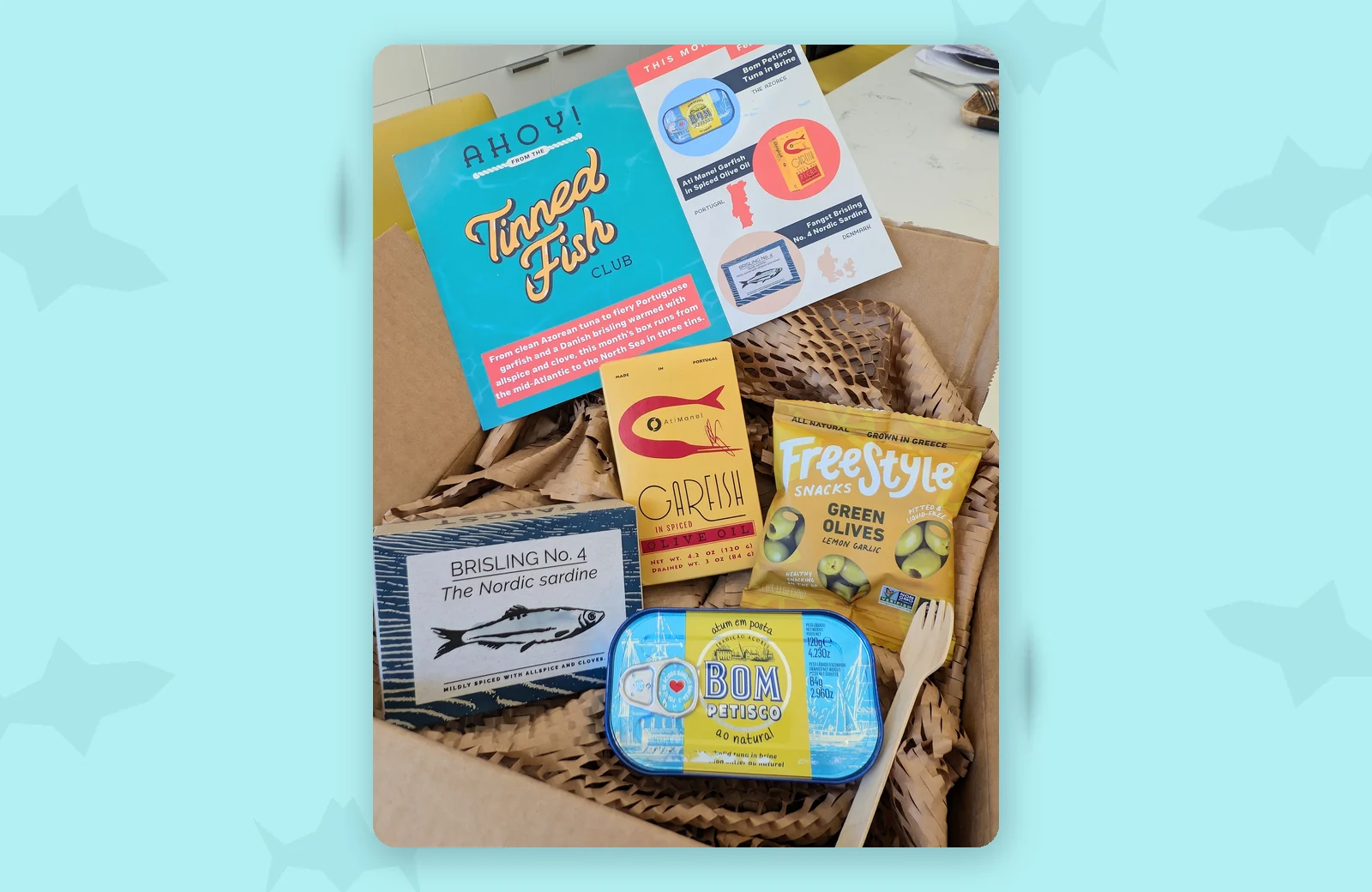
Tinned Fish Club for August 2026: Bom Petisco Tuna in Brine, Ati Manel Garfish in Spiced Olive Oil, Fangst Brisling No. 4
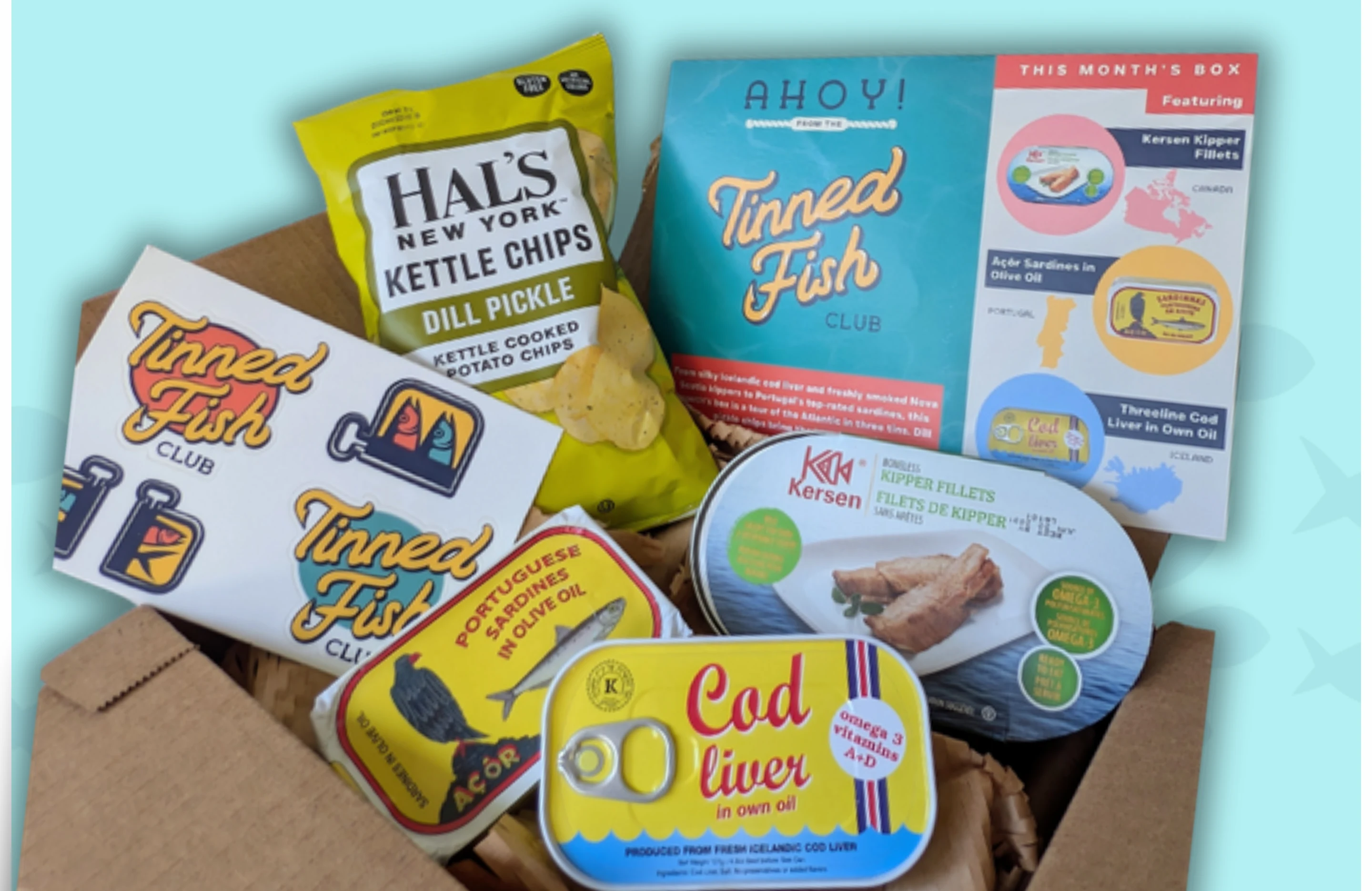
Tinned Fish Club for July 2026: Kersen Kipper Fillets, Açôr Sardines in Olive Oil, Threeline Icelandic Cod Liver